


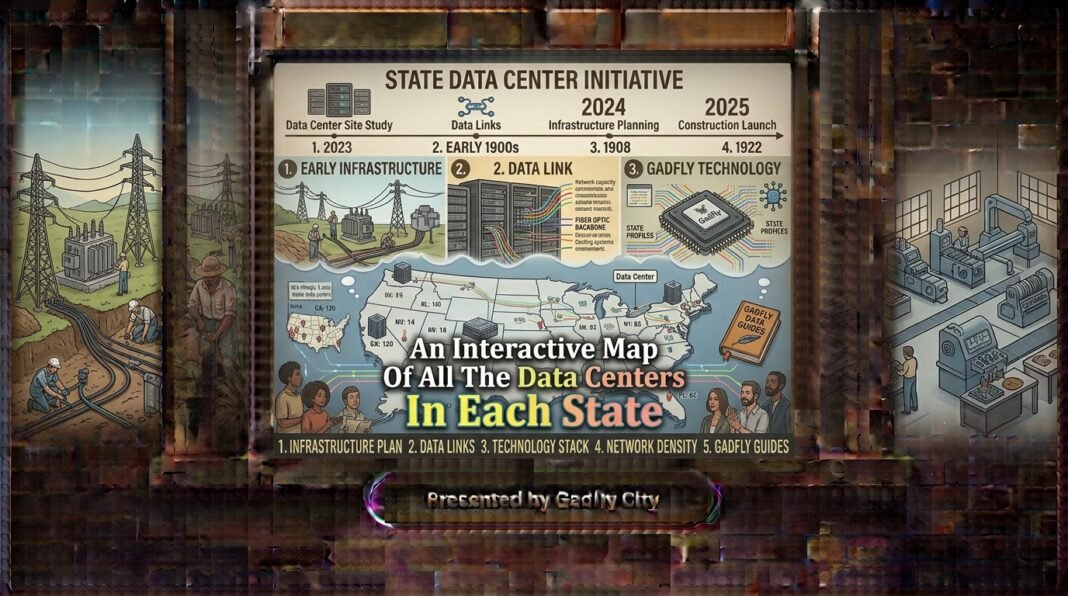
Data Centers are the physical backbone of the internet, storing information and powering cloud services, streaming platforms, artificial intelligence, and everyday websites. An interactive map of data centers across the United States helps readers explore where these facilities operate, understand why certain states attract them, and find reliable sources to locate data centers near their communities.
Where To Find An Interactive Map Of Data Centers In The United States
The easiest way to explore data centers by state is to combine an interactive industry map with government energy information and local planning records. No single public map should be assumed to contain every operating facility, planned project, and private installation. Different directories use different definitions, and some facilities do not disclose their locations publicly.
For a starting point, explore Data Center Map, which provides a searchable directory of facilities across the United States. You can browse locations, investigate individual markets, and identify operators with a presence in different regions.
Another useful resource is Baxtel’s Data Center Map, which helps readers explore data center markets and individual facilities. These directories are useful for discovery, although their coverage and listings should be checked against other sources before drawing conclusions.
For a broader infrastructure perspective, the U.S. Energy Information Administration (EIA) publishes information about electricity generation, consumption, and power markets. While it is not a comprehensive facility-by-facility data center map, its information helps explain why certain locations are better positioned to support energy-intensive infrastructure.
Data Centers By State: Why Location Matters
Data Centers are not distributed evenly across the country. Their locations reflect a combination of business demand, network connectivity, access to electricity, land availability, and state and local policies.
Virginia: A Major Data Center Hub
Northern Virginia, particularly Loudoun County and surrounding communities, has become one of the country’s most important data center markets. Its established fiber networks, proximity to major internet exchange infrastructure, and concentration of cloud and technology businesses have helped attract investment.
This concentration creates advantages for operators because networks and customers are already nearby. However, it can also increase competition for electrical capacity, land, and infrastructure upgrades.
Texas: Land, Power, And Growing Demand
Texas attracts data center development through its large land base, established technology markets, and substantial energy infrastructure. Yet available land does not automatically mean a project can secure enough dependable electricity.
The state’s electricity system can be explored through the Electric Reliability Council of Texas (ERCOT), which publishes information about the Texas power grid. Its resources help readers understand the energy system supporting major industrial and digital loads.
California: Technology Demand And Infrastructure Constraints
California benefits from its large technology economy, established businesses, and demand for cloud services. However, land costs, electricity prices, environmental considerations, and local permitting requirements can influence where facilities are built.
Other States Worth Exploring
Data Centers also operate in states such as Oregon, Arizona, Georgia, Illinois, Ohio, and New York. Their importance varies by market, and new projects can change the geographic picture over time.
| State | Why It Attracts Attention | What To Investigate |
| Virginia | Dense network infrastructure and cloud demand | Northern Virginia facility clusters |
| Texas | Land availability and large-scale energy infrastructure | Grid capacity and proposed projects |
| California | Technology companies and major population centers | Power costs and local restrictions |
| Oregon | Established technology infrastructure | Regional development and electricity supply |
| Georgia | Connectivity and expanding digital infrastructure | Atlanta-area projects |
| Illinois | Business demand and central connectivity | Chicago-area facilities |
| Arizona | Technology investment and available development sites | Water availability and energy demand |
| Ohio | Enterprise demand and regional connectivity | Columbus-area development |
This is a practical starting list, not a complete inventory or a ranking of every state’s facilities.
How To Find Data Centers In Your State
Finding Data Centers near your home or business requires more than searching for a state name. A reliable research process combines industry directories with official records.
Step 1: Search An Interactive Directory
Begin with Data Center Map or Baxtel. Search your state or a nearby city, then record the facility name, address or general location, operator, and any available status information.
Check whether a listing describes an operating facility, a planned development, or a campus containing multiple buildings. These distinctions matter because a proposed project should not be counted as an operating data center.
Step 2: Check Government And Utility Records
Search your state or county’s planning department for data center permits, zoning applications, environmental reviews, and approved construction projects. Local public records can reveal proposed facilities that have not yet appeared in commercial directories.
Next, review the relevant utility’s public planning documents and the EIA’s electricity data resources. These sources can help establish the energy context, although they will not necessarily identify every individual facility.
Step 3: Verify The Facility’s Status
Before publishing a map or using a listing for research, check the operator’s website, planning documents, or other reliable records. A data center campus may contain several buildings, while a directory may list the entire campus as one location.
For readers creating their own state-by-state inventory, a spreadsheet with facility name, city, operator, status, source, and verification date provides a simple way to track changes.
What A Data Center Map Can Tell You About Local Infrastructure
A map does more than show where buildings are located. It helps explain how digital infrastructure interacts with the physical economy.
Electricity Demand And Grid Capacity
Data Centers need electricity for computing equipment, cooling, networking, and supporting systems. As artificial intelligence and cloud computing expand, some facilities require substantially more power than traditional server rooms.
The U.S. Department of Energy provides information about energy infrastructure and related policy. For local research, electricity planning documents can help explain whether a region is preparing for additional large loads.
This issue connects to a broader economic question: what happens when essential infrastructure becomes concentrated in particular locations? Our article, What Would Happen If The US Economy Collapsed?, explores wider economic vulnerabilities and the consequences of interconnected systems.
Water Use, Cooling, And Environmental Considerations
Some Data Centers use water-based cooling systems, while others rely on different cooling designs. Actual water consumption depends on facility technology, climate, operating conditions, and the source of electricity.
A map alone cannot establish whether a facility is environmentally sustainable. Readers should look for water-use disclosures, environmental permits, local water-stress assessments, and energy information before making that judgment.
Infrastructure Concentration And Geographic Risk
Concentrated development can improve connectivity and lower certain operating costs, but it may also place pressure on shared infrastructure. Electricity networks, transmission lines, fiber routes, and water supplies all influence whether a region can accommodate additional development.
Geography matters in other critical systems, too. Our article on Why The Strait Of Hormuz Matters To The Global Economy examines how the concentration of essential routes can affect interconnected markets. The same general principle applies to digital infrastructure: location creates advantages, but dependence on shared systems also creates risks.
How Accurate Are Public Data Center Maps?
No public directory should be treated as a definitive list of every Data Center in the United States. Some facilities are privately operated, some listings become outdated, and proposed projects may be included alongside operational sites.
There is also a difference between a data center building, a campus, a colocation provider, and a cloud region. One cloud region may use multiple physical facilities, while a single campus can contain several data center buildings. Counting these categories together without clarification can produce misleading totals.
For the most reliable results, compare multiple directories, confirm facility status using official records, and note the date each listing was checked. Where an exact street address is not publicly confirmed, use the most specific verified location rather than guessing.
Readers interested in the unexpected side of infrastructure can also explore Briefly Weird, where unusual stories offer a reminder that important systems often have details that are easy to overlook.
Frequently Asked Questions
1. Where Can I Find An Interactive Map Of Data Centers In The USA?
You can explore Data Centers using Data Center Map and Baxtel. These directories help locate facilities by region, but their listings should be verified against official records.
2. Which US State Has The Most Data Centers?
Northern Virginia is widely recognized as a leading data center market, but state rankings depend on the directory, reporting date, and counting method. Check current industry listings before relying on a precise ranking.
3. How Can I Find Data Centers Near My Home?
Search an industry directory by state or city, then verify results through county planning records and operator websites. Some facilities publish only general locations, so an exact address may not be available.
4. Are All Data Center Locations Publicly Available?
No. Many commercial facilities appear in public directories, but some locations may be omitted, listed at campus level, or disclosed only partially. Security concerns and differences in reporting practices affect the available information.
5. Why Are Data Centers Concentrated In Certain States?
Data center development depends on reliable electricity, network connectivity, available land, customer demand, construction costs, and local policies. States with established technology ecosystems can attract further investment because existing infrastructure supports new projects.
6. Can A Data Center Map Show Environmental Impact?
A location map can identify areas for further investigation, but it cannot independently establish environmental impact. Electricity consumption, cooling technology, water use, emissions, and local resource constraints require additional verified information.
Conclusion
An interactive map of Data Centers provides a useful starting point for understanding the physical infrastructure behind modern digital life. By combining industry directories, government records, and local planning information, readers can build a clearer picture of where facilities operate and why certain states attract more development.
The important question is not simply how many Data Centers a state contains. It is whether its infrastructure can support continued growth, how the costs and benefits are distributed, and what that development means for local communities.
At Gadfly City, we believe that understanding the systems behind everyday life is a practical way to make sense of a changing world. Explore our coverage, including What Would Happen If The US Economy Collapsed?, as we examine the connections between infrastructure, economics, history, and public life. A map shows us where things are; careful research helps us understand why they matter.
Sources And References
- Data Center Map – USA Data Center Directory
- Baxtel – Data Center Map And Market Information
- U.S. Energy Information Administration – Electricity Data
- U.S. Department Of Energy
- U.S. Environmental Protection Agency – Energy Resources
- U.S. Geological Survey – Water Resources
- Loudoun County, Virginia – Government And Planning Resources