

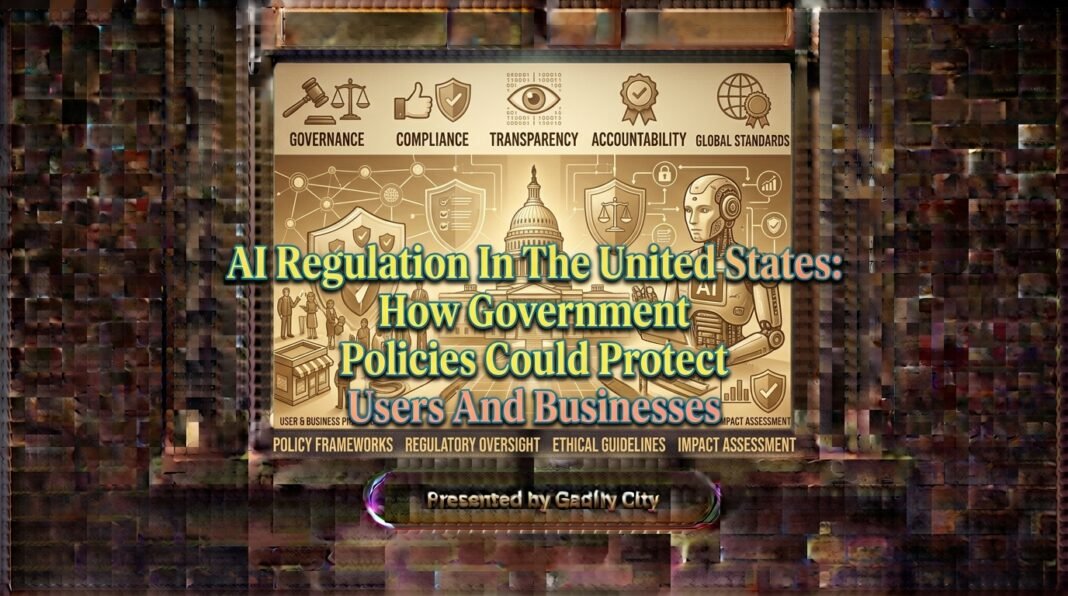
AI Regulation In The United States could help protect users and businesses by establishing clear rules for privacy, transparency, discrimination, and accountability. Effective policies can reduce harmful AI decisions without unnecessarily restricting innovation. The challenge is finding a practical balance between public protection, business compliance, technological progress, and the economic opportunities created by artificial intelligence.
What Does AI Regulation In The United States Mean?
AI regulation refers to laws, rules, standards, and government policies that guide how artificial intelligence is developed and used. These policies can cover personal data, automated decisions, cybersecurity, consumer protection, and responsibility when AI systems cause harm.
However, AI Regulation In The United States does not mean that every AI tool must follow one identical set of requirements. Different industries face different risks, and government agencies may apply existing laws alongside AI-specific guidance.
For example, an AI chatbot answering general questions presents different risks from a hiring system that ranks job applicants or a financial tool that evaluates loan applications. The second group can directly influence people’s opportunities and financial circumstances.
The National Institute of Standards and Technology (NIST) offers a voluntary AI Risk Management Framework that helps organizations identify, assess, and manage these risks. It provides a practical starting point for understanding responsible AI use.
How AI Regulation Could Protect Users
Protecting Personal Data And Privacy
AI systems may process conversations, photographs, financial information, and other sensitive details. Without suitable safeguards, users may not understand how their information is collected, stored, or used.
Thoughtful AI Regulation In The United States could strengthen transparency and encourage businesses to limit data collection, secure stored information, and explain important uses of personal data. Existing privacy and consumer-protection laws may also apply, depending on the circumstances.
For users, the practical benefit is greater control over personal information. For businesses, responsible data practices can reduce security risks and help maintain customer confidence.
Reducing Discrimination In Automated Decisions
AI systems learn patterns from data, but historical data can contain unfair patterns. A hiring algorithm, for instance, could disadvantage qualified applicants if its training data reflects past discrimination.
Regulation can encourage regular testing, documented decision-making, and human review in sensitive situations. These safeguards do not guarantee perfect outcomes, but they make problems easier to identify and address.
A useful principle is simple: automating a decision should not remove accountability for that decision.
Improving Transparency And Accountability
When an AI system produces an incorrect result, users should have a reasonable way to question decisions that significantly affect them.
Depending on the application and applicable law, businesses may need to disclose AI involvement, explain relevant processes, or provide a route for complaints. Clear accountability also helps organizations investigate errors rather than treating an algorithm’s output as unquestionable.
How AI Regulation In The United States Could Affect Businesses
Creating Clearer Compliance Expectations
Businesses need to understand which rules apply before investing in new technology. Uncertainty can delay product launches, increase legal expenses, and make long-term planning more difficult.
Consistent guidance can help companies determine which systems need additional testing, what records to maintain, and when human oversight is appropriate.
The U.S. Government Accountability Office reported in September 2025 that federal agencies were operating under numerous AI-related requirements and oversight arrangements. Although its report focused on federal government use, it illustrates why clear responsibilities and coordination matter.
A predictable policy environment also matters beyond technology companies. AI adoption can influence operating costs, productivity, and competition across industries, connecting regulation with the broader economic impact of government policies.
Supporting Fair Competition Between Large And Small Companies
Large technology companies can often afford dedicated legal teams, compliance specialists, and extensive testing. Smaller businesses may struggle to absorb the same costs.
If compliance requirements are too complex or expensive, established companies could gain an advantage simply because they have greater resources. On the other hand, basic safeguards can help smaller businesses compete by building customer trust.
A balanced approach would scale requirements according to the risk of an AI application, its potential impact, and the organization’s role. A simple customer-service assistant should not automatically face the same obligations as a system making consequential medical or financial recommendations.
Reducing Business And Financial Risks
AI-related failures can lead to customer complaints, operational disruption, legal disputes, and reputational damage. Preventive testing and clear internal procedures may cost money initially, but they can reduce the likelihood of expensive mistakes.
The broader regulatory impact on the U.S. economy depends on how policymakers balance these costs against potential benefits such as greater trust, improved productivity, and more reliable services.
The objective should not be regulation for its own sake. It should be to make the costs of managing risk proportionate to the potential harm.
What Is The Current Direction Of AI Regulation In The United States?
The policy debate is not simply about whether AI should be regulated. It is also about which level of government should set the rules and how much flexibility developers should retain.
On December 11, 2025, the White House issued Executive Order 14365, titled Ensuring A National Policy Framework For Artificial Intelligence. It called for a less burdensome national framework and challenged certain state-level approaches that the administration considered obstacles to AI innovation. The order also directed federal agencies to take specific actions concerning state laws and national standards.
This direction highlights a central tension in AI Regulation In The United States: national consistency may simplify compliance, but state-level policies can address local concerns and emerging risks.
The order itself does not automatically replace every state law. Its effects depend on the legal authority involved, subsequent agency actions, legislation, and court decisions. Businesses should therefore distinguish between a policy announcement and a binding legal obligation.
The debate also connects with the broader U.S. government policy framework, where federal and state responsibilities can shape how national priorities are implemented.
A Practical Framework For Responsible AI Oversight
A useful way to evaluate AI Regulation In The United States is to consider three questions: What could go wrong, who could be harmed, and what safeguards are reasonable?
Match Regulation To The Level Of Risk
A company using AI to suggest blog topics does not face the same potential consequences as a hospital using AI to support clinical decisions. Oversight should reflect that difference.
Low-risk applications may need basic documentation and security checks. Higher-risk applications may justify more extensive testing, human review, monitoring, and clear procedures for addressing complaints.
Establish Clear Responsibilities
AI developers build systems, while businesses may purchase and deploy them. Responsibility can become unclear when something goes wrong.
Effective policies should clarify the duties of each party, including who checks system performance, protects data, investigates failures, and communicates with affected users.
Review Systems After Deployment
AI systems can behave differently as data, user behavior, and operating conditions change. Initial testing alone may not identify every problem.
Businesses should monitor performance, investigate unexpected outcomes, and update safeguards when necessary. The NIST framework organizes risk management around four functions: Govern, Map, Measure, and Manage. These provide a useful structure for putting responsible AI practices into operation.
How Consumers And Businesses Can Prepare
AI Regulation In The United States will continue to evolve as policymakers respond to new technologies and practical experience. Organizations do not need to wait for every policy question to be settled before improving their practices.
Businesses can start by identifying where they use AI, what information those systems process, and whether their outputs influence important decisions. They should also document vendor responsibilities, verify important AI-generated claims, and create a process for handling errors.
Consumers can take a similar approach by checking how AI-powered services use personal information, reviewing important decisions rather than accepting them automatically, and being cautious about products that promise extraordinary results without credible evidence.
The Federal Trade Commission has already taken action against companies accused of making deceptive AI-related claims. Its enforcement work demonstrates that describing a product as AI-powered does not exempt a business from existing consumer-protection rules.
Ultimately, AI Regulation In The United States should be assessed by its real-world outcomes: fewer preventable harms, clearer business responsibilities, and enough room for useful technologies to develop.
Conclusion: Balancing Innovation With Public Protection
The long-term success of AI Regulation In The United States will depend on whether policies protect people without making responsible innovation unnecessarily difficult. Strong rules can improve trust, while poorly designed requirements can raise costs and limit competition.
There is no single rule that can eliminate every AI risk. A more practical solution combines clear legal responsibilities, risk-based safeguards, independent oversight where appropriate, and regular evaluation as technology changes.
For readers following these developments, we can explore the policy decisions, economic consequences, and public-interest questions shaping the country through GadflyCity. By understanding both the benefits and the limitations of regulation, we can make better-informed decisions about the technologies increasingly influencing everyday life.
Frequently Asked Questions
1. Why Is AI Regulation Important In The United States?
AI regulation can help protect personal information, reduce discriminatory outcomes, and improve accountability when automated systems cause harm. It can also give businesses clearer expectations for developing and deploying AI responsibly.
2. Does The United States Have A Single AI Regulation Law?
The United States does not rely on one comprehensive AI law covering every application. Federal and state laws, agency enforcement, executive actions, and voluntary standards collectively shape the rules affecting AI developers and users.
3. How Could AI Regulation Affect Small Businesses?
AI regulation could help small businesses build customer trust and understand compliance expectations. However, complex requirements may increase legal, testing, and documentation costs, making proportionate obligations important for smaller organizations.
4. How Can Consumers Protect Themselves When Using AI?
Consumers can review privacy policies, avoid sharing unnecessary sensitive information, verify important AI-generated claims, and question consequential automated decisions. They should also understand the limitations of AI tools before relying on their recommendations.
Sources And References
- National Institute Of Standards And Technology (NIST) – AI Risk Management Framework
- Federal Trade Commission (FTC) – Artificial Intelligence And Consumer Protection
- U.S. Government Accountability Office – Federal AI Efforts And Oversight Requirements
- The White House – Executive Order 14365: Ensuring A National Policy Framework For Artificial Intelligence
- National Institute Of Standards And Technology (NIST) – AI Risk Management Framework FAQs